Overview
Leonard Alecu, transitioning from a successful career in large-format photography, makes a striking debut in the realm of experimental documentary with “Ice Breath.” This film, which stands out for its artistic merit, is a significant addition to the genre.
Concept and Themes
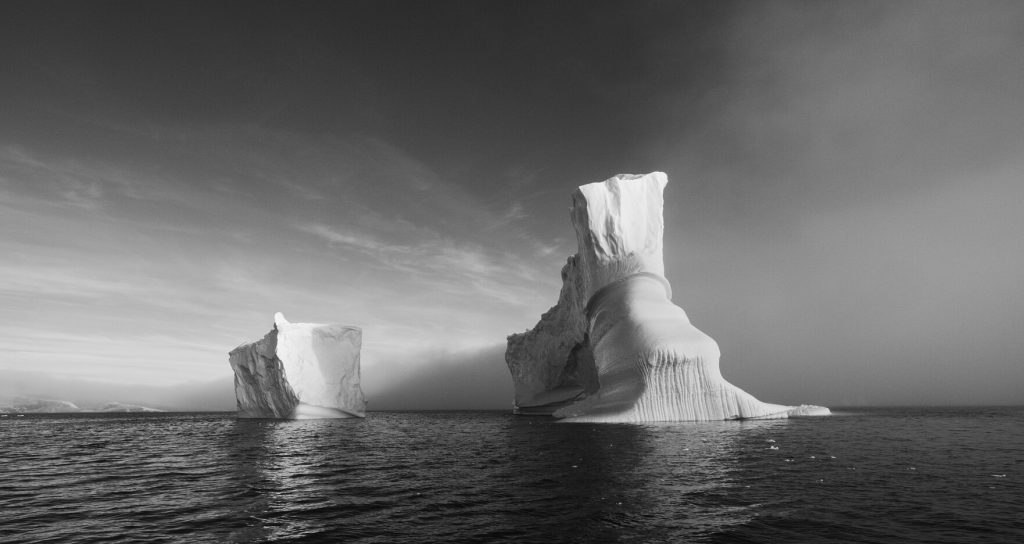
Described as “an existential journey from genesis to extinction,” the documentary captures the gradual decay of monumental icebergs in the Arctic. Set to John Luther Adams’ evocative composition, “Become Ocean,” it serves as a poignant meditation on the fragility of human existence against nature’s grandeur.
Visual Style
Alecu employs his photographic expertise by opting for a black-and-white aesthetic, resulting in a rich palette that enhances the visual storytelling. His imagery transforms icebergs into sculptural forms, drawing comparisons to the works of Henry Moore and illuminated by ethereal shafts of light akin to the Arctic landscapes by painter Lawren Harris.

Narrative Flow
As the film progresses, the comforting rhythms of nature begin to fade. Viewers experience a rising tension as dark waters encroach upon the icebergs. The once inseparable elements break apart, revealing skeletal structures and fissures that evoke a sense of loss. A relentless sun further accentuates this transformation, leaving behind a haunting reminder of what has been irrevocably lost.
Reflection on Humanity
“Ice Breath” resonates as a thoughtful companion to Alecu’s other works, highlighting the insignificance of humanity in the broader context of Earth’s history. His ability to capture nature with dramatic flair results in breathtaking imagery that prompts audiences to reflect on both the fate of our natural environment and their own uncertain futures.
Conclusion
Non-narrative filmmaking, as exemplified by Alecu, can effectively explore monumental themes that traditional storytelling may struggle to contain. “Ice Breath” exemplifies this potential, inviting viewers to engage with the profound complexities of existence and nature.